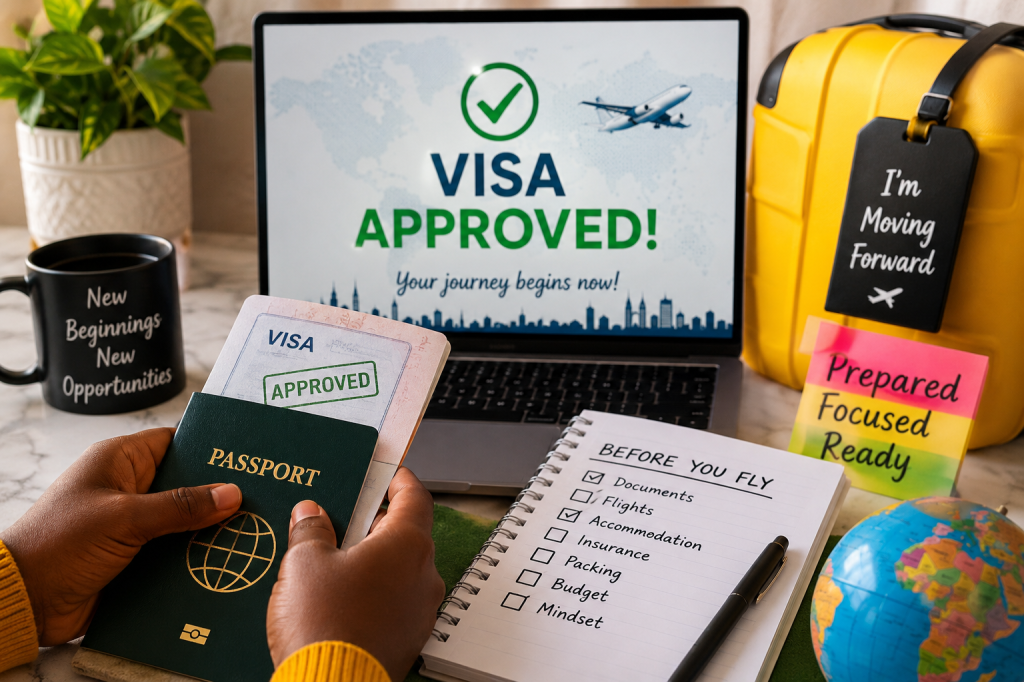
10 Things to Do Before You Board the Plane
Getting your visa approved can feel like the biggest hurdle is finally over.
You check your email.
You see “Approved.”
You breathe a sigh of relief.
You tell your family and friends.
You start imagining your new life.
But there is one important thing many people forget:
A visa approval is not the end of the journey. It is the beginning of your final preparation.
Before you close your suitcase and head to the airport, there are several things you should take care of.
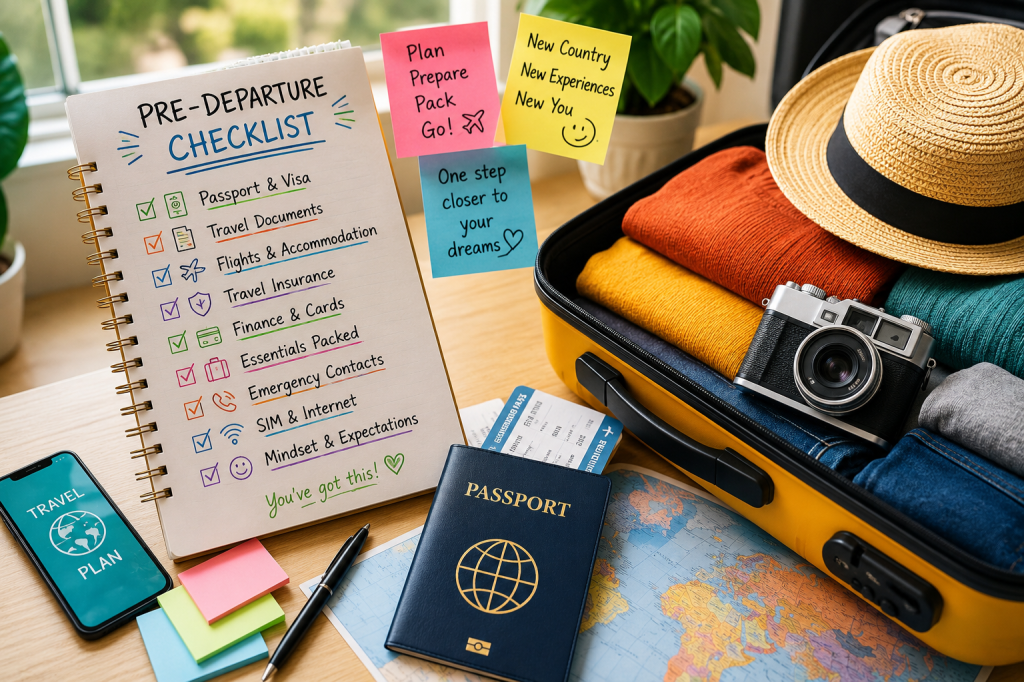
Here are 10 things to do before you board that plane.
1. CHECK YOUR VISA CAREFULLY
Don’t just celebrate the approval and put your visa away.
Check the details carefully.
Make sure your name, passport number, date of birth, visa type, validity dates, and conditions are correct.
If something doesn’t look right, find out what needs to be corrected before travelling.
A small mistake can become a big problem when you’re trying to board a flight or enter a new country.
2. UNDERSTAND YOUR ENTRY DEADLINE
Getting a visa does not always mean you can travel whenever you want.
Depending on the type of visa and destination, there may be specific dates or conditions attached to your entry.
Know:
- When your visa becomes valid
- When it expires
- Whether there is a deadline for your first entry
- How long you are allowed to stay
Know the rules before you book your journey.
3. DON’T BOOK YOUR FLIGHT IN A RUSH
The excitement can make you want to book the first affordable ticket you see.
Take a moment.
Compare your options and check the baggage allowance, layovers, arrival time, airport, and any transit requirements.
If possible, consider arriving at a reasonable time so you aren’t trying to find accommodation or transportation in an unfamiliar place at midnight.
The cheapest flight is not always the easiest flight.
4. ORGANIZE YOUR IMPORTANT DOCUMENTS
Your documents should be easy to find, not buried at the bottom of your suitcase.
Keep important documents together in a secure folder.
Depending on your situation, these may include:
- Passport
- Visa
- Admission or employment documents
- Accommodation information
- Financial documents
- Travel insurance information
- Important letters or approvals
- Emergency contact information
Also keep digital copies somewhere secure.
You don’t want to be searching through 20,000 photos on your phone at the airport looking for an important document. 😂
5. KNOW WHERE YOU ARE SLEEPING
Before you leave your home country, know exactly where you will stay when you arrive.
Have the:
Full address.
Phone number.
Booking confirmation.
Check-in instructions.
If someone is picking you up, confirm the arrangement before you travel.
Don’t arrive in a new country with your luggage and say:
“I’ll figure it out when I get there.”
Preparation will save you stress.
6. PLAN YOUR TRANSPORTATION FROM THE AIRPORT
Your journey doesn’t end when the plane lands.
Find out how you’re getting from the airport to your accommodation.
Depending on the destination, you may use:
- Public transportation
- Airport shuttle
- Taxi
- Ride-hailing services
- Private pickup
Know the approximate cost and how you will pay.
This is especially important if you’re arriving in a country you’ve never visited before.
7. PREPARE FOR YOUR FIRST FEW DAYS
You don’t need to pack your entire life into one suitcase.
But you should prepare for your first few days.
Think about:
Clothing.
Basic toiletries.
Medications you are legally allowed to travel with.
Chargers and adapters.
Weather-appropriate clothing.
Important personal items.
Remember that the weather may be completely different from what you’re used to.
Research your destination before packing.
8. PREPARE YOUR MONEY AND PAYMENT METHODS
Don’t depend on only one payment method.
Before travelling, understand how you will access your money after arrival.
Consider having:
- A suitable bank card
- Some emergency funds
- A secure way to access your accounts
- Knowledge of the local currency
- A backup payment option
Also be careful about carrying large amounts of cash.
Your first few days should be about settling in, not panicking about how to pay for food or transportation.
9. SAVE IMPORTANT CONTACTS
Before you leave, save important numbers and addresses.
For example:
- Your accommodation
- School or employer
- Emergency contacts
- Airport transportation
- Insurance provider
- Embassy or consulate
- Someone you trust back home
Don’t rely entirely on social media messages.
Save important information somewhere you can access even when your internet connection is unavailable.
10. HAVE A FIRST-WEEK PLAN
You don’t need to have your entire life figured out before you board the plane.
But you should know what happens after you land.
Ask yourself:
Where am I sleeping?
How will I get there?
Where will I get food?
How will I communicate?
What important appointment or registration do I need to complete?
Who can I contact if something goes wrong?
A simple plan can make your first week much less overwhelming.

ONE MORE THING: DON’T FORGET TO BREATHE. 🌍✈️
Moving abroad can be exciting, but it can also be emotional.
You may feel happy one minute and nervous the next.
You may be excited about your new beginning while also missing the people and life you’re leaving behind.
That’s normal.
You don’t have to have everything figured out on Day One.

Prepare what you can. Learn as you go. Give yourself time to adjust.
Your visa is approved.
Your bags are packed.
Your journey is about to begin.
You didn’t come this far just to arrive unprepared.
Move wisely. Prepare realistically. Give yourself room to begin again.
MoveWise Africa
Your trusted guide to moving abroad with confidence. 🌍
Information. Resources. Opportunities.


